Contemporary Art America
ICA feature | November 11, 2026 | New York
Lilia Carrillo: abstraction keeps a trace
At kurimanzutto in New York, Mañana de octubre follows a painter who let fabric, printed fragments and remembered forms disturb the painted surface.
A painting does not have to choose between an image and a material. In Lilia Carrillo's work, a shape can hover between a mark, a scrap and the memory of something seen. Mañana de octubre, opening November 12 at kurimanzutto in New York, follows that uncertainty across paintings and works on paper made between 1948 and 1974.
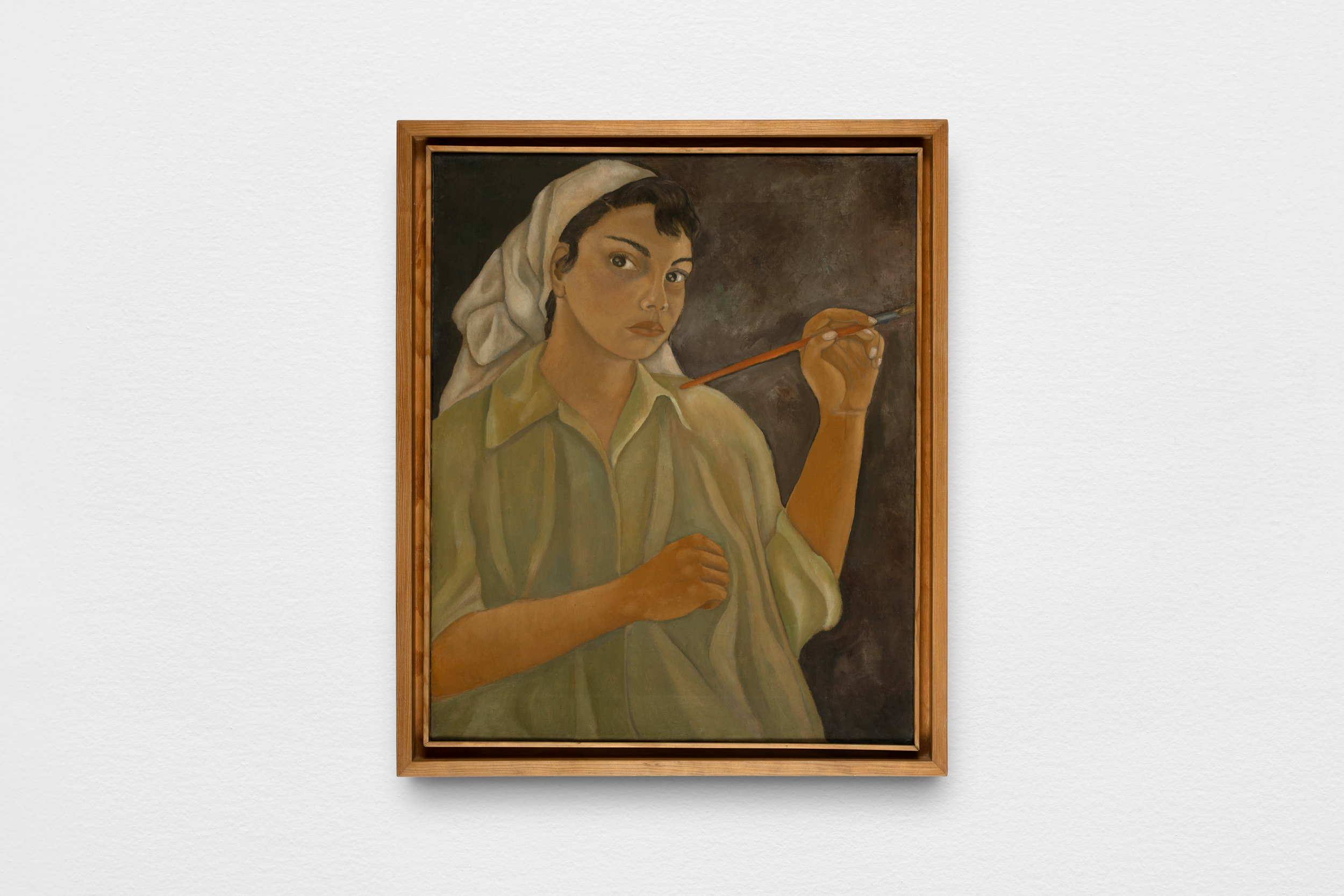
The gallery begins with Autorretrato Escolar, a school self-portrait from 1948. Carrillo holds a brush and turns toward the viewer, her working hand as important as her face. It is a useful introduction to a show about what a painter can do, rather than a simple before-and-after story in which representation gives way to abstraction.
Born in Mexico City in 1930, Carrillo trained at La Esmeralda and studied in Paris from 1953 to 1955. She became part of the Generación de la Ruptura, whose artists challenged the dominance of figurative and nationalist painting in Mexico. The gallery traces her engagement with Surrealism, European Informalism and Abstract Expressionism. Those connections matter, but the surfaces resist being reduced to a list of movements.
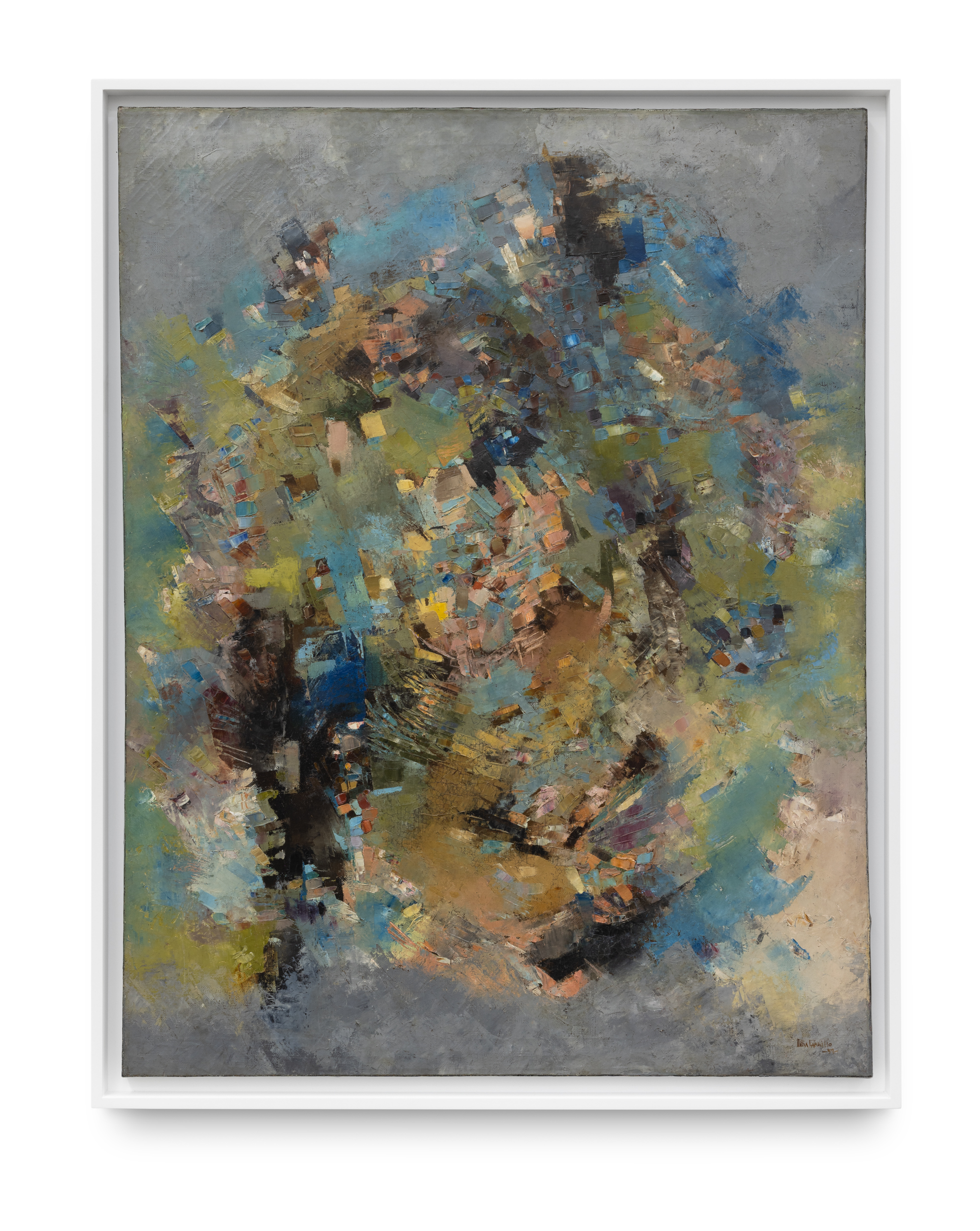
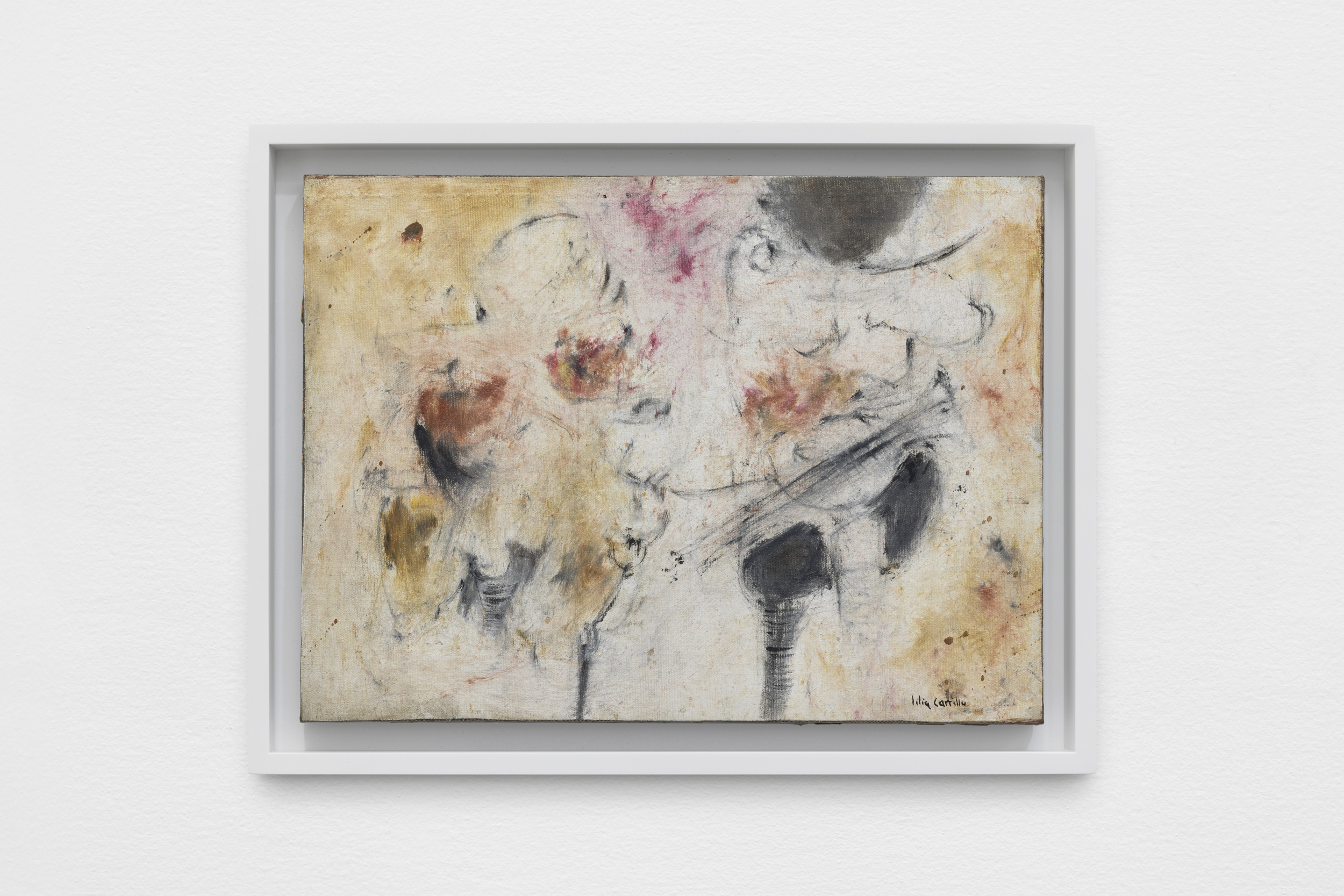
In Júbilo neutro, from 1959, small bursts of color gather inside a gray-green field. The forms feel concentrated without becoming a single readable figure. Abstracción, from 1961, is looser: pale space surrounds dark, almost calligraphic marks and scattered passages of color. The two paintings give different weights to a similar question: how much can a form suggest before it becomes a named thing?
Material adds another kind of interruption. In the title work, Mañana de octubre from 1964, Carrillo combined paint and fabric, letting the weave set a grid inside the gestures. Her experiments also reached the stage through costume studies for Alejandro Jodorowsky's theater. Elsewhere, a postcard, newspaper clippings and a piece of a Superman comic enter the work without remaining straightforward pictures to read. The gallery describes an artist who dissolved those fragments into the painting rather than displaying them as intact signs.
This presentation follows Americas Society's Ruptures and Premonitions, which ran in New York from May to August 2026. That earlier exhibition emphasized Carrillo's cuts, scratches and layered surfaces. Here, the wider span of dates lets an early self-portrait sit in the same conversation as the later experiments. The point is not that the figure disappears. It is that a trace can remain active after its outline has stopped being certain.
Lilia Carrillo: Mañana de octubre
kurimanzutto, 516 West 20th Street, New York
November 12, 2026 to January 30, 2027
Tuesday to Saturday, 10am to 6pm. Free admission. Check the gallery before traveling.
Official exhibition details and press materials · Americas Society's earlier exhibition. Checked November 11, 2026.
Images show individual artworks, not installation views of this exhibition. A source-based preview, not an in-person review. Work descriptions draw on the gallery's texts and supplied photographs; the interpretive framing is ICA America's.